You have probably seen a polished corporate video from a competitor and wondered what it actually took to make it. Or maybe someone has quoted you $3,000 and someone else has quoted $30,000 for what sounds like the same thing, and you have no idea why. That gap rarely gets explained clearly, and it costs Sydney businesses time, money, and frustration every year.
Corporate video production in Sydney follows a surprisingly consistent process once you understand how it works. There are three core phases, a handful of cost drivers that account for most of the budget variation, and specific qualities that separate a testimonial or explainer video that converts from one that simply exists on a webpage.
This guide walks you through the entire process from initial brief to final delivery, explains what actually drives cost and timelines, and gives you a clear picture of what good looks like across the most common formats. By the end, you will know enough to commission a corporate video with confidence, brief a production team properly, and avoid the most common mistakes that cause projects to run over budget and underdeliver.
Most businesses approach a corporate video brief with a budget figure and a general idea of what they want. The surprises come later: timelines that stretch longer than expected, revision rounds that turn out to be limited, or a finished video that does not quite match what was discussed. These gaps almost always trace back to one thing, not understanding what was included in each phase of production before signing off.

Knowing what pre-production, production, and post-production actually involve changes how you read a quote. In practice, a $3,000 and a $15,000 quote for what sounds like the same video rarely reflect one company overcharging, they typically reflect different decisions about what each phase includes, and which phases have been cut to hit a price point.
The business case for getting this right is clear. Companies using video see 49% faster revenue growth than those that do not (Wyzowl, 2026). That result does not come from simply having a video. It comes from a video built on a clear strategy, a disciplined production process, and a final product matched to a specific audience and platform.
This guide is written for business owners and marketing managers in Sydney and NSW who are deciding whether to commission a corporate video. It covers the full process from brief to delivery, what drives cost and timelines, and what makes each video format actually effective, so you can go into your first production conversation with realistic expectations and the right questions.
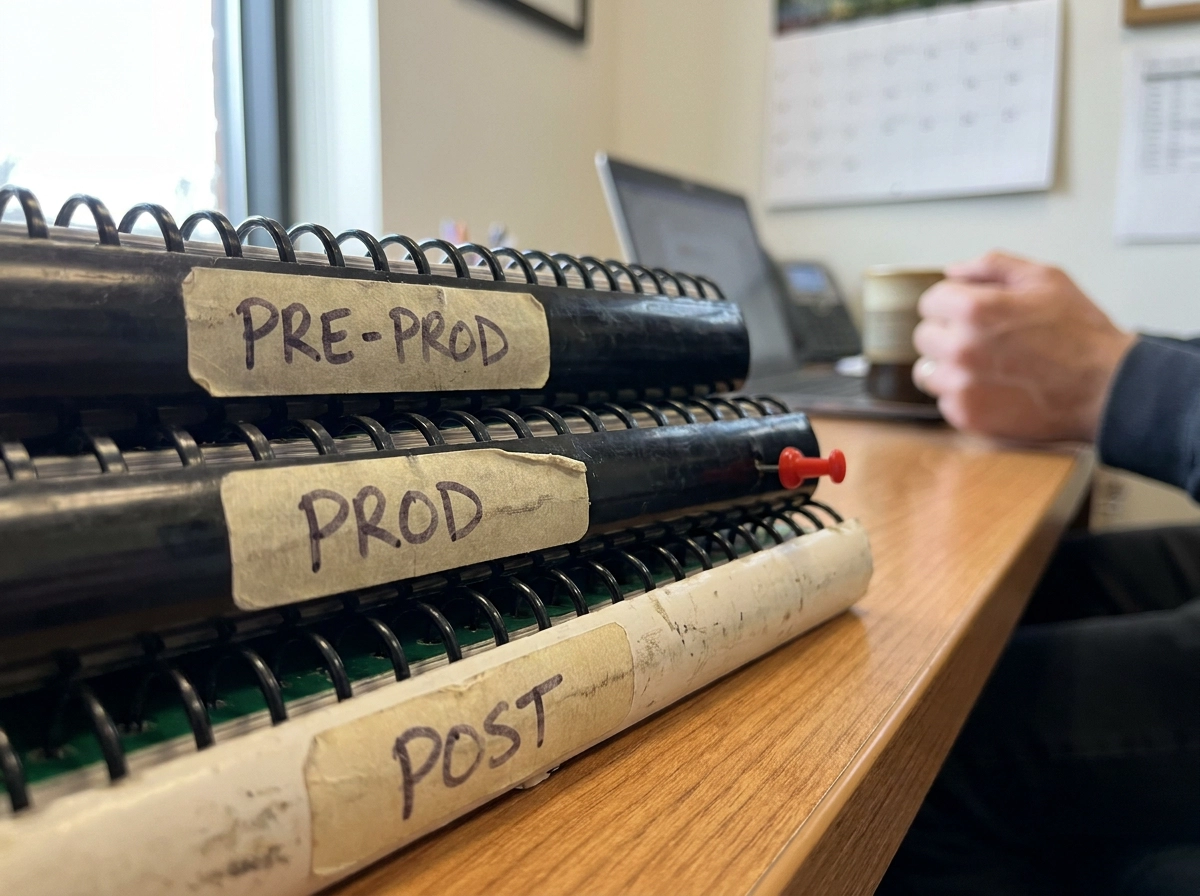
Every professional corporate video, regardless of format or budget, moves through three phases: pre-production, production, and post-production. The sequence is not flexible. Each phase depends on the one before it, and cutting or compressing any one of them produces predictable problems.
Pre-production covers the strategy, scripting, shot lists, location scouting, and scheduling that happens before a camera is switched on. Production is the shoot itself. Post-production is where footage becomes the finished video.
These phases are not interchangeable because the decisions made in pre-production determine whether the shoot day runs efficiently, and the quality of the footage determines what is possible in the edit. Skip the planning and you are making expensive creative decisions on set, under time pressure, with a crew on the clock.
The Pre-Production section below details why that trade-off is costly. Understanding this distinction is the most practically useful thing you can do before your first conversation with a production team. It tells you what a quote actually covers, not just what it costs. For a broader view of the factors that shape a project's outcome before production begins, the guide on 3 Factors That Determine the Success of Your Video Project covers the strategic side in detail.
The following sections break down exactly what happens in each phase.
Pre-production is where every decision that determines whether your video works gets made. It covers discovery calls, audience and messaging strategy, scripting or interview question development, location scouting, shot list creation, and scheduling, everything before a camera is switched on.
This phase typically accounts for 20-30% of a project budget. It is also the first thing cut from low-cost quotes, which is precisely why those projects so often require reshoots or mid-project scope changes. The money saved upfront gets spent twice fixing problems that pre-production would have caught.
A strong brief helps, but it does not replace this phase. A brief tells the production team what you want. Pre-production translates that into a concrete shooting plan: who is on camera, where, in what order, saying what, with which shots supporting the narrative. Those are different tasks.
What pre-production looks like by video type
For a testimonial or interview-based video, pre-production means developing the question set, coaching the subject on how to answer naturally rather than recite, and mapping out how the footage will be structured in the edit before a single frame is captured. That last point matters: the editor's job becomes significantly harder when the shoot was not designed with a clear editorial structure in mind.
For a brand story or explainer, the work goes further. Scripting, storyboarding, and sign-off on messaging all need to happen before any location, talent, or crew is locked in. Changing the core message after locations are booked and crew is confirmed is expensive.
The cost of skipping it
Reshoots are the most expensive outcome in video production, and compressing or skipping pre-production is their primary cause. A reshoot does not just cost the additional shoot day; it resets post-production and extends the timeline for every stakeholder waiting on the final video.
For a fuller look at why this phase gets underestimated, Pre-Production: The Phase Most People Underestimate covers the pattern in more detail.
Once pre-production has locked in the shot list, locations, and schedule, production begins. This is the shoot itself: crew on location, cameras rolling, lighting rigged, and audio captured.
Most Sydney corporate shoots are structured as either a half-day (4 hours) or a full-day (8 hours) block. Half-day shoots suit focused work: a single testimonial subject, two or three team profiles, or a straightforward interview setup. Full-day shoots are the right call for brand videos covering multiple interviews, recruitment campaigns with varied setups, or anything requiring more than one location in a single day. Choosing the wrong format in either direction wastes either money or opportunity.
On a 618 Media shoot, that typically means a camera operator/director and an audio and lighting specialist, a two-person crew that keeps costs down without sacrificing capability. Larger productions with multiple concurrent setups or specialist requirements bring additional crew, but most business video projects do not need it.
Location type shapes the entire day. An in-office shoot works around existing furniture, available light, and background noise from the building. A hired studio removes those variables but adds a venue cost and travel time. A multi-location brand video across Sydney requires precise scheduling between sites, which is why that scope almost always calls for a full day.
Equipment decisions are made in pre-production but executed on shoot day. Cinema cameras, mirrorless rigs, and broadcast cameras each have different handling requirements and lighting needs. If drone footage is required, that introduces separate logistics, and it is covered in more detail in the Sydney-specific factors section below.
One practical advantage of working with a small, in-house crew is continuity: the people operating the camera are the same people who will edit the footage. That means creative decisions made on set carry directly into the edit, with no handover between a production crew and a separate post team. Which production scope feels right for your project?
Once the shoot wraps, post-production is where the raw footage becomes something a viewer actually watches. This phase covers the assembly edit, structural refinement, colour grading, audio mixing, music licensing, motion graphics (if scoped), titles, and export for every intended platform.
Post-production is a substantial cost phase that clients often underestimate, budget conversations tend to focus on shoot-day pricing, while the editing work that turns raw footage into a finished video takes proportionally significant time. A single shoot day generates far more raw footage than the runtime of the finished video, and shaping that footage into a polished 90-second cut takes significantly longer than it took to capture.
Colour grading is not a finishing touch. When footage is shot across different rooms, lighting conditions, or times of day, the raw clips look inconsistent on screen. Grading corrects that, establishes a unified visual tone, and is one of the clearest signals separating professional work from self-produced content. The factors that define high-quality corporate videography include visual consistency as a primary indicator, and grading is where that consistency is built.
Audio mixing covers more ground than most clients expect: dialogue clarity, background noise removal, music balancing, and ensuring the final mix works on speakers and on mobile with the sound off. Captions are not optional for corporate video in 2025; a significant share of LinkedIn and website video is watched without audio, and a mix that has not been built with that in mind will underperform.
Revision rounds are defined, not open-ended. 618 Media's packages include two structured revision rounds, and keeping feedback consolidated within those rounds is the most practical thing you can do to protect the timeline. Scope creep enters most often through informal feedback arriving after a version has been approved, or through multiple stakeholders submitting notes separately rather than consolidated.
Delivery format should be scoped before production starts, not after the edit is locked. A 16:9 horizontal cut for website embedding has different compression requirements than a vertical cut for Instagram Reels, a square crop for LinkedIn, or a high-resolution export for a conference screen. Each version takes editing time, and that time should be in the budget from the beginning.
Runtime is one of the worst guides to budget. A 60-second brand commercial shot across three Sydney locations with motion graphics and licensed music can cost significantly more than a 10-minute internal training series filmed in a single office over one day. Cost follows complexity, not duration.
The six drivers that actually move the number are:
Crew size and day rate, a two-person crew costs less than a five-person one
Number of shoot days, each additional day adds crew, equipment, and logistics costs
Location complexity and permits, a hired studio or a multi-location shoot requiring council permits adds both time and spend
Motion graphics and animation, custom animation is among the most labour-intensive post-production work
Music licensing, premium licensed tracks add cost; royalty-free alternatives reduce it
Revision rounds, every round beyond the scoped number costs real editing time
Based on 618 Media's project experience, budgets for Sydney corporate video typically range from around $3,000 for a simple testimonial to $50,000+ for a complex brand campaign with animation and multiple deliverables, use the project calculator for a scoped estimate. For a breakdown of what influences pricing, the frequently asked questions on professional videographer costs in Sydney covers this in more detail.
AI-assisted production has reduced median per-minute costs for commodity video from around $4,200 to around $2,500 per finished minute (2025-2026). For straightforward formats where the brief is clear and the message is simple, that shift is real. Strategic production, where messaging, narrative structure, and brand positioning require judgement calls throughout, still depends on human expertise.
Package-based pricing, typically half-day and full-day shoot bundles with defined inclusions, eliminates scope ambiguity for both sides before the project starts.
To get a scoped estimate before any call, use the 618 Media Video Project Calculator. It generates a realistic range based on your specific format, shoot requirements, and deliverables.
The format a testimonial is captured in determines whether it works before a single edit decision is made. The most common failure is over-scripting: when a subject reads or recites a prepared statement, audiences recognise it immediately and disengage. The person on screen sounds rehearsed because they are rehearsed, and that kills the credibility the video exists to build.
Effective testimonial production uses a question-and-answer interview format. The subject answers in their own words, and the editor shapes the final narrative from those real responses. The script emerges from the footage, not the other way around.
The structure that works
The most credible testimonials follow a consistent arc: the situation or problem before your product or service, the specific experience of working with you, and the concrete outcome. That sequence mirrors how a viewer evaluates trust. Problem first establishes relevance. Experience builds belief. Outcome closes the case.
Length and platform
For a website homepage or LinkedIn, aim for roughly 60 to 90 seconds, long enough to land the arc, short enough to hold attention. Longer cuts of two to three minutes suit case study pages or email sequences where the viewer has already shown intent and is willing to invest more time. These are working guidelines, not hard rules, platform and audience intent should govern the final decision.
The same interview footage can produce multiple deliverables: a 90-second hero cut for the website, a 30-second version for LinkedIn, and a vertical 15-second excerpt for Instagram Stories or Reels. Scoping these cuts before the shoot, not after, is what determines whether you leave the edit with one asset or three. What comes out of a shoot covers this in more detail.
Why production quality is not optional
A testimonial shot on a smartphone with poor audio does not just look amateur. It actively undermines the trust the video is meant to generate. Australian enterprises using professional video achieve 84% stronger brand perception than those using amateur content. The production quality is part of the message.
Explainer videos have a different job to testimonials. Where a testimonial builds trust through someone else's voice, an explainer removes confusion that is blocking a decision. The single measure of whether an explainer works is this: does the viewer understand your offer clearly enough to act? If the script does not achieve that, no production value will rescue it.
Get the script right before any other decision is made.
Format follows content type, not budget. Live-action works well for service businesses, people-driven brands, and anything that gains credibility from showing real faces and real environments. Animation suits abstract processes, software workflows, or concepts that simply cannot be filmed. Choosing animation because it looks modern, or live-action because it is cheaper, both produce weaker results than choosing the format the content actually needs.
A hybrid approach is worth considering: live-action footage with motion graphic overlays for data, process steps, or diagrams. This delivers the clarity of animation for the parts that need it, without the cost of a fully animated production.
Pacing is the most underrated factor in explainer effectiveness. A deliberate delivery rate, with pauses between ideas, gives viewers time to process each point before the next arrives. Rushing to compress information into a shorter runtime is one of the most common reasons explainers fail.
Structure the script before you scope the production. Effective explainer scripts follow a consistent arc: problem statement (viewer recognition), solution introduction, how it works, and call to action. If that arc is not visible on the page before shoot day, the edit will not find it.
Viewers decide quickly whether to keep watching. An explainer that does not establish the problem and why it matters in its opening moments loses most of its audience before the explanation begins. The same principle applies to the event and social content discussed in why most event videos fail to drive engagement: front-loading relevance is not optional.
Where explainer videos are built around clarity of information, brand stories are built around something less tangible but more persuasive: emotional connection.
A corporate overview tells viewers what a business does. Services, team, location, a call to action. It is functional and efficient, and it belongs in sales decks, trade show loops, and website About pages where someone already has intent and just needs the facts confirmed.
A brand story does something harder. It communicates why a business exists, what it believes, and why any of that should matter to the viewer. That emotional register is why narrative-driven professional video drives significantly stronger message retention than amateur or purely functional content. Viewers do not remember a list of services; they remember how something made them feel.
The production requirements reflect this difference. In 618 Media's experience, a corporate overview typically suits a half-day shoot, while a brand story usually calls for a full day or more, the difference reflects the heavier pre-production and editorial work the narrative format requires. Pre-production investment is heavier because the story has to be found and shaped before it can be filmed. The edit takes longer because the emotional pacing of each cut matters in a way it simply does not for a functional overview.
The most common mistake businesses make is commissioning the wrong format for the platform. A brand story placed in a sales deck where someone needs quick facts will feel slow. A corporate overview placed on a homepage where a cold visitor is deciding whether to trust you will feel cold. The choice should follow one question: what do you want the viewer to do after watching, and what does the viewer need to feel before they will do it?
For most small to mid-sized Sydney businesses, the most practical approach is to treat the brand story as the primary asset and cut a tighter, functional corporate overview from the same footage. One shoot, two formats, no duplicated cost.
Choosing the right video format is only part of the planning equation. If your production involves Sydney locations outside a private office or studio, there are logistical and regulatory factors that will affect your budget and timeline regardless of video type.
Public space filming requires permits. Any commercial filming on outdoor areas controlled by the City of Sydney, including footpaths, parks, and public plazas, requires a permit application with lead times that can extend significantly for complex productions. Different LGAs manage their own land, so a multi-location shoot spanning the CBD, Barangaroo, and Darling Harbour may involve separate applications to separate authorities. A production team that does not flag this in pre-production can push your shoot date back by weeks.
Iconic locations come with specific requirements. The CBD, Circular Quay, and harbour-front precincts are among Sydney's most visually compelling backdrops, and they are also among the most permit-intensive. A local production team familiar with these locations will build the lead time and any associated fees into the schedule from the start, rather than discovering restrictions after the shoot is already booked.
Multi-location shoots add real logistical cost. Travel time between locations is billable time. A brand video covering the inner west, the CBD, and Parramatta in a single day requires tight scheduling and adds crew hours that a single-location office shoot does not.
Drone footage over Sydney is tightly regulated. CASA compliance is non-negotiable, and no-fly zones cover significant parts of the inner city and harbour. Any production quoting drone footage should confirm operational approvals upfront. Scope surprises here are expensive.
A Sydney-based team removes coordination friction. Timezone-aligned communication, familiarity with local council processes, and on-the-ground knowledge of locations are practical advantages that matter when schedules are tight.
For a tailored estimate on your specific Sydney project, the 618 Media Video Project Calculator gives you a realistic budget range before any conversation is needed.
The single biggest variable in any corporate video project is how well you and your production team work together.
Your brief sets the ceiling on creative quality. A brief that names the target audience, specifies the platform, states what you want the viewer to do after watching, and flags any hard messaging requirements gives a production team everything it needs to make good creative decisions. A brief that says "we need a company video, something professional" does not. The more specific your inputs, the less guesswork the team carries into every decision from script structure to shot selection.
Build your approval process before production starts, not after the first cut arrives. If multiple people inside your business need to sign off on the script, the rough cut, and the final edit, map that process out at the beginning. Stakeholder approval cycles are one of the most consistent causes of blown timelines on corporate video projects. A five-person sign-off chain discovered at the rough cut stage can add two to three weeks to a project that was otherwise on schedule.
Consolidate feedback before sending it. One set of clear, decision-ready notes per revision round keeps a project on time and within budget. Sequential comments from individual stakeholders, arriving at different times, force the editor to work in circles. This is the single most practical thing a client can do to protect both the timeline and their own budget.
Treat approved versions as final. Informal feedback after a version has been signed off is the most common entry point for scope creep. A shared feedback document and a defined sign-off step are simple tools that prevent it.
On timelines: standard corporate video projects in Sydney run 4 to 8 weeks from brief to delivery. Testimonials and event recaps can turn around in 2 to 3 weeks. Productions involving animation or multiple locations typically need 8 to 12 weeks.
Finally, the most productive client relationships treat the production team as a creative partner, not just an executor. For testimonial and brand story formats especially, a production team that can tell you what will and will not work on camera is more valuable than one that simply does what they are told.
With a clear working process and a brief that defines audience, platform, and desired action, you are ready to move from planning to commissioning.
Before any call, use the 618 Media Video Project Calculator to get an estimate based on your specific format, timeline, and scope. It removes the guesswork before any conversation starts and gives you a realistic budget range to work from.
When you do speak with a production team, come prepared with three answers:
Who is this video for? Be specific about the audience, not just "our customers."
Where will it be published? Website, LinkedIn, paid social, and conference screens all have different format and length requirements.
What do you want the viewer to do after watching? Book a call, trust your brand, apply for a role, understand a product. One clear action per video.
A well-scoped project with proper pre-production, a clear brief, and a defined approval process will almost always come in on time, on budget, and deliver the result it was built for. The problems covered throughout this guide, reshoots, revision spirals, and missed messaging, trace back to gaps in those three areas, not to video production being inherently unpredictable.
618 Media works directly with businesses across Sydney and NSW on brand stories, testimonials, explainers, and recruitment videos. There is no agency overhead, no account manager layer, and pricing is estimate-based and transparent from the start.
Whether this is your first corporate video or a replacement for one that did not perform, this guide gives you the foundation to brief a production team with confidence and assess their response clearly.
Corporate video production does not have to be complicated, expensive, or unpredictable. The businesses that get the best results share three habits: they invest in pre-production before a camera appears, they brief with clarity on audience, placement, and desired action, and they treat the production team as a creative partner rather than an order-taker.
Format matters. Cost drivers are knowable in advance. Sydney-specific logistics are manageable when accounted for early. None of this requires guesswork if you approach the process with the right foundation.
If you are ready to move forward, use the 618 Media Video Project Calculator to build your budget estimate, then reach out with your brief. The clearer your thinking at the start, the stronger your finished video will be. That is where results are won.
Not sure what video you need? Use our free Video Project Calculator to get a tailored recommendation and rough estimate in under 2 minutes.
Use the Calculator618 Media is a video production company based in NSW, working with businesses, artists, and organisations across Sydney and NSW on music videos, brand stories, corporate video, event coverage, real estate, social media content, and more.
Every project starts with a conversation about what you want to achieve. We handle everything from concept through to final delivery.
Get in TouchFill in your details and a member of the 618 Media team will get back to you personally.
A team member reviews every message personally. No automated replies.
Message received. The 618 Media team will get back to you personally, usually within a few hours on business days.
