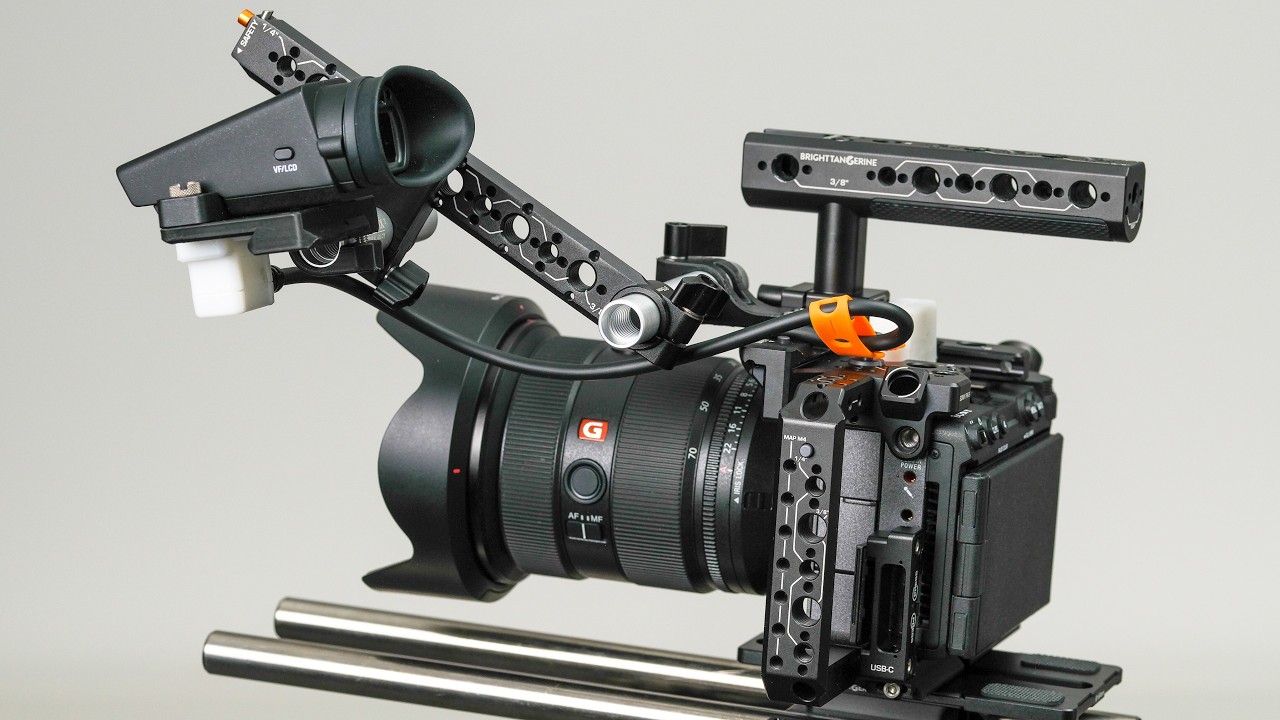
Most marketing managers believe that a higher camera model number automatically results in better audience engagement. In reality, a camera is just a tool for capturing light, and the sony fx5 vs sony fx6 for corporate video debate usually has more to do with logistical speed than final pixels. You could spend double the budget on a top-tier camera body and end up with the same final result if the lighting is poor or the script lacks a clear message.
Expensive gear cannot fix a poorly planned production. A video looks cheap when the windows are blown out—meaning they appear as solid white light with no detail—or when the subject's face is lost in shadow. Both the Sony FX5 and FX6 use similar sensor technology that captures 15+ stops of dynamic range, which is the camera's ability to see detail in both the brightest highlights and the darkest shadows simultaneously. If your current videos look amateur, the issue is likely your lighting setup rather than the camera choice. Investing in a professional crew that understands how to shape light around a subject provides more value than simply renting the newest body on the market.
The FX5 occupies a middle ground that changed how small crews operate on location in Sydney and across NSW. It provides the compact form factor of a mirrorless camera with the professional internal tools of a larger cinema rig.
The primary distinction lies in the internal electronic variable ND filter. ND filters act like sunglasses for the camera, allowing the operator to keep the aperture wide open for a blurred background even in harsh midday sun. While an FX3 requires the operator to screw glass filters onto the front of the lens, the FX5 handles this internally with a dial. This saves approximately 10 to 15 minutes every time the crew moves from an indoor office to an outdoor courtyard. For a brand story shoot with five locations in one day, that translates to over an hour of extra filming time regained.
Brand stories often require a mix of tripod-based interviews and handheld b-roll, which is the supplemental footage that covers the edit. The FX5 features a top handle with professional XLR audio inputs—the standard three-pin connection for high-quality microphones—making it more balanced for handheld work than a stripped-back FX3. If your project involves capturing a CEO walking through a factory floor, the FX5 provides more stability and better audio reliability without needing an external cage or extra cables that can fail during a move.
The FX5's internal ND can be mapped to a control dial to maintain a constant aperture even as clouds pass over a window during an interview, ensuring your depth of field remains consistent throughout the shot.
When deciding on the sony fx5 vs sony fx6 for corporate video, consider the size of the room and the number of people on set. The FX6 is a larger body that requires more space for mounting external monitors and wireless video transmitters. If you are filming in a cramped Sydney CBD office, the smaller footprint of the FX5 allows the crew to get closer to the walls and find better angles that a larger camera simply cannot fit into. Smaller cameras also look less intimidating to staff members who are not used to being on camera, resulting in more natural performances.
Comparing the sony fx5 vs sony a7siii for social media content reveals that specialized tools matter more than resolution. While the A7SIII is a world-class hybrid camera, it lacks the professional file metadata—information about the lens and shutter—that the FX5 records. This metadata allows editors to use software-based stabilization that looks far more natural than standard digital cropping. For social content where the camera is moving quickly to follow a fitness trainer or a chef, this extra data ensures the final 9:16 vertical video remains sharp and steady.
Corporate interviews live or die by their audio quality. The FX5 and FX6 both offer dual XLR inputs, but the FX6 adds 12G-SDI output, a high-speed data connection used to send a signal to professional monitors over long distances. If your project requires a director and a client to watch the feed in a separate room, the FX6 is the necessary choice. For standard brand stories where the client is standing next to the camera operator, the FX5’s HDMI output is more than sufficient and keeps the overall kit weight down.
You could shoot your social content on a modern smartphone or a basic mirrorless camera, and for quick daily updates, that works well. However, these consumer devices struggle with heat management and often shut down during a 45-minute corporate interview. The FX5 includes an internal cooling fan that allows for unlimited recording times even in the Australian summer heat. Choosing a dedicated cinema camera over a hybrid ensures the shoot doesn't grind to a halt because the hardware needs to cool down. Settling the sony fx5 vs sony fx6 for corporate video question usually comes down to whether you need the heavy-duty connectivity of the FX6 or the nimble portability of the FX5.
When looking at the sony fx5 vs red komodo for music videos, the choice depends on the desired texture of the image. The RED Komodo uses a global shutter, which captures the entire sensor at once, eliminating the "jello" effect where straight lines appear to bend during fast horizontal movement. The FX5 uses a rolling shutter but compensates with much better low-light performance. If you are filming a music video in a dark warehouse with limited portable lighting, the Sony sensor will produce a cleaner image with less digital noise than a RED. The sony fx5 specs for professional videography in 2026 include internal 12-bit recording, which provides billions of color shades, allowing the colorist to push the look of the video further in post-production without the image falling apart.
The best way to decide on a camera package is to define exactly where the video will be seen and how much time is available on the shoot day. Contacting a production team during the concept phase allows for a gear list that matches your specific location constraints and visual goals. Starting this conversation early ensures your budget goes toward what appears on screen rather than unnecessary rental fees.
| Feature | Sony FX3 | Sony FX5 | Sony FX6 |
|---|---|---|---|
| ND Filters | None (External Only) | Electronic Variable ND | Electronic Variable ND |
| Audio Inputs | XLR via Top Handle | Dual XLR (Built-in) | Dual XLR (Built-in) |
| SDI Output | No | No | Yes (12G-SDI) |
| Cooling | Internal Fan | Internal Fan | High-Flow Fan |
| Primary Use | Gimbal / B-Roll | Corporate / Brand Stories | Large Commercial Sets |
Not sure what video you need? Use our free Video Project Calculator to get a tailored recommendation and rough estimate in under 2 minutes.
Use the CalculatorThe choice depends on your production environment. If you work primarily as a solo operator or in small teams for brand storytelling, the FX5 is more portable and fits into tighter spaces. If you work on larger commercial sets that require SDI monitoring and timecode sync for multiple cameras, the FX6 remains the industry standard.
Yes, primarily because of the internal ND filters and the more ergonomic body design. The FX5 allows for faster setup and easier control over depth of field in changing light conditions, whereas the FX3 requires more external accessories to achieve the same professional results in an interview setting.
The A7SIII is a hybrid camera designed for both photos and video, while the FX5 is a dedicated cinema camera. The FX5 includes professional video features that the A7SIII lacks, such as built-in ND filters, XLR audio inputs without an adapter, and more advanced thermal management for long recording sessions.
The FX5 is a significant upgrade for creators who need to move from amateur to professional production quality. Its ability to record gyro metadata for stabilization and its superior low-light performance make it the best cinema camera for social media content australia for those producing high-end brand content.
The RED Komodo is a specialized tool with a global shutter, making it ideal for high-action music videos and cinema. However, the FX5 is generally more versatile for corporate work due to its superior autofocus, better battery life, and higher sensitivity in low-light environments where you cannot control every light source.
618 Media is a video production company based in NSW, working with businesses, artists, and organisations across Sydney and NSW on music videos, brand stories, corporate video, event coverage, real estate, social media content, and more.
Every project starts with a conversation about what you want to achieve. We handle everything from concept through to final delivery.
Get in TouchFill in your details and a member of the 618 Media team will get back to you personally.
A team member reviews every message personally. No automated replies.
Message received. The 618 Media team will get back to you personally, usually within a few hours on business days.
